Beard Styles: The Complete Guide for Every Face Shape (2026)
Introduction
Most men grow a beard without a plan. They stop shaving, let it go for a few weeks, then wonder why it looks rough or unflattering. The truth is, a beard styles isn’t just about facial hair — it’s a framing tool. The right style sharpens your jawline, balances your face shape, and projects exactly the image you want.
The problem? There are dozens of beard styles out there, and most guides either list them without context or give generic advice that doesn’t help you decide. This guide is different.
Here, you’ll find every major beard styles explained clearly — what it looks like, who it suits, how difficult it is to maintain, and what a professional barber would actually tell you before you commit. Whether you’re rocking your first stubble or going full Viking, this is the resource you need to make the right call.
Let’s get into it.
Why Beard Styles Choice Actually Matters
Before you pick a style based on what looks cool on someone else, understand this: beard styles are not one-size-fits-all. A long, full beard that looks phenomenal on a man with an oval face and thick hair growth can look heavy and shapeless on someone with a round face and patchy growth.
Choosing the right beard styles comes down to four factors:
- Your face shape — the single biggest influence on what works
- Your hair growth pattern — thick, thin, patchy, straight, curly
- Your lifestyle — corporate environment vs. creative field vs. outdoor work
- Your maintenance commitment — five minutes a week vs. a daily grooming routine
Get these four factors right and almost any style you choose will look intentional and sharp.
The Most Popular Beard Styles (Complete List)
Short Beard Styles
Short beard styles are the most versatile category. They work in professional settings, require moderate maintenance, and suit almost every face shape. If you’re new to growing a beard, starting short is always the smarter move.
1. Heavy Stubble (The 10-Day Beard)
Heavy stubble — roughly 4–6mm — is consistently one of the most attractive beard styles according to multiple grooming surveys. It reads as masculine without being high-maintenance, and it works on virtually every face shape.
Best for: Oval, square, and oblong faces
Maintenance level: Low — trim every 2–3 days with a trimmer set at 4–6mm
Styling difficulty: Very easy
Who should avoid it: Men with extremely sparse or patchy growth — the gaps show more at this length than in a fuller beard
Barber tip: Don’t underestimate your neckline. Even with stubble, defining a clean neckline (roughly two finger-widths above the Adam’s apple) makes a big difference between looking groomed and looking like you forgot to shave.
2. Short Boxed Beard
The short boxed beard is a neat, full beard kept at 1–2cm and trimmed with clean, defined lines on the cheeks and neckline. It’s sometimes called a “corporate beard” because it’s professional enough for most workplaces while still being a statement.
Best for: Square and oval faces
Maintenance level: Medium — trim every 5–7 days
Styling difficulty: Easy once you know your lines
Who should avoid it: Round-faced men who don’t add taper or definition — it can add width
3. Goatee
The goatee covers the chin and surrounding area, usually without connecting to a full cheek beard. There are several goatee variations, including the classic goatee (chin only), the full goatee (chin plus mustache, connected), and the Van Dyke (chin beard and mustache kept separate).
Best for: Round and diamond faces — the vertical line elongates the face
Maintenance level: Medium — edges need regular trimming to stay sharp
Styling difficulty: Moderate
Common mistake: Letting the edges get soft or uneven — a goatee lives and dies by its symmetry
4. Chinstrap Beard
The chinstrap runs along the jawline from one sideburn to the other, typically without a mustache. It was extremely popular in the early 2000s and has had a slow, qualified comeback in more refined, tapered versions.
Best for: Oval and oblong faces
Maintenance level: High — the clean edges require very regular upkeep
Styling difficulty: High
Honest barber opinion: The chinstrap is polarizing. Done right, it’s architectural. Done sloppy, it ages badly. Only commit if you’re willing to maintain it every 2–3 days.
5. Circle Beard
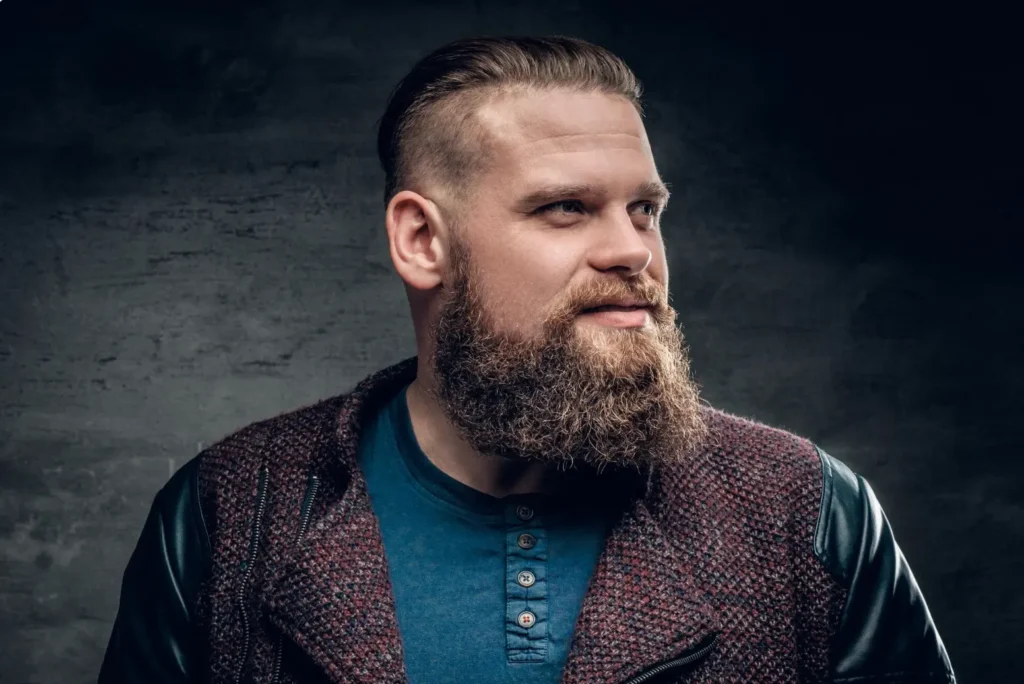
The circle beard is a combination of a rounded goatee and a mustache, connected in a circular shape around the mouth. It’s a clean, conservative option that photographs well.
Best for: Oval and oblong faces
Maintenance level: Medium
Styling difficulty: Easy
Medium Beard Styles
Medium-length beards (roughly 1–3 inches) offer more styling options and a stronger visual presence. They take longer to grow and need more care, but the results are worth it for the right face.
6. Balbo Beard
The Balbo is a trimmed beard with a disconnected mustache — meaning the beard on the cheeks is removed, leaving only the chin beard and a floating mustache above the lip. It looks distinctive without being extreme.
Best for: Oval and triangle faces
Maintenance level: Medium-high
Styling difficulty: Moderate — requires consistent shaping
Famous examples: Iron Man (Tony Stark’s signature look is a variant of this)
7. The Ducktail Beard
The ducktail is a full beard that’s been shaped to a point at the chin, resembling the tail of a duck. It blends the fullness of a long beard with a structured, intentional shape — making it one of the most flattering medium-to-long beard styles available.
Best for: Oval, oblong, and square faces
Maintenance level: Medium — requires regular trimming and shaping to maintain the point
Styling difficulty: Moderate to high
Barber tip: Use beard scissors rather than a trimmer for the point — it gives you more precision
8. Beardstache
The beardstache pairs a prominent, thick mustache with a short stubble beard. The mustache is the focal point. It reads as slightly vintage but modern — a strong choice for men who want something distinctive.
Best for: Oval, square, and rectangular faces
Maintenance level: Medium — the mustache needs daily shaping
Styling difficulty: Moderate
9. Anchor Beard
The anchor beard is a pointed chin beard combined with a mustache and a strip of hair along the jawline — shaped to resemble a nautical anchor. It’s sharp, structured, and suits men who want a designer look.
Best for: Oval faces, diamond faces
Maintenance level: High
Styling difficulty: High — edges need precision
Long Beard Styles
Long beards are a commitment — in growth time, maintenance, and lifestyle fit. But done right, they’re among the most striking looks in men’s grooming.
10. Full Beard
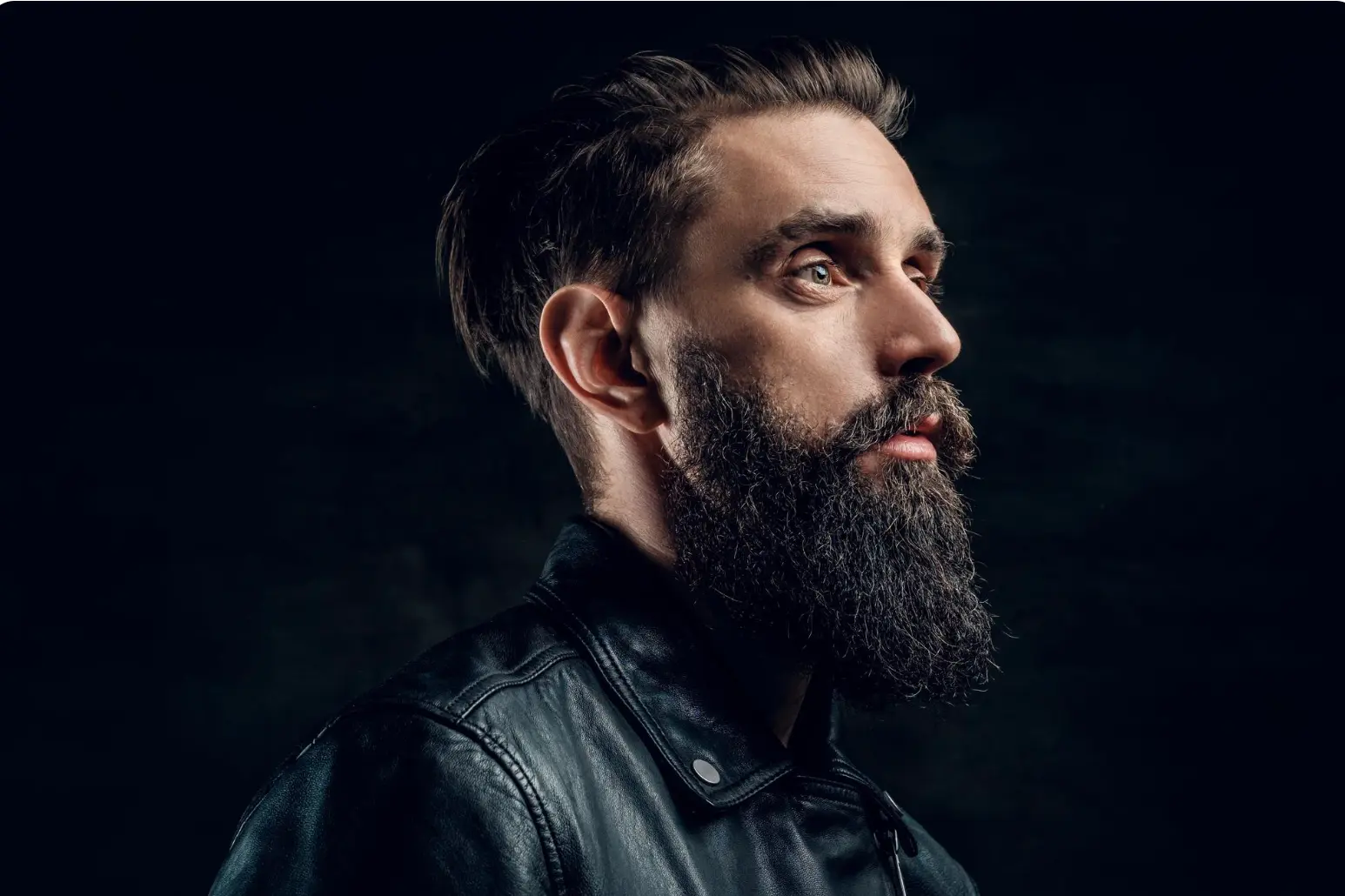
The classic full beard covers the entire lower face — cheeks, chin, jawline — at any length beyond 2–3 inches. It’s the beard styles most men are working toward when they say they want to grow a beard.
Best for: Oval and oblong faces — avoid on very round faces without significant tapering
Maintenance level: Medium to high — needs washing, conditioning, oiling, and weekly trimming
Styling difficulty: Medium
Growth time: 3–6 months for a truly full look
Barber tip: The most common full beard mistake is neglecting the neckline. Let it grow out past where it should be and the whole beard loses definition. Keep the neckline clean and let the cheek line grow naturally.
11. Garibaldi Beard
The Garibaldi is a wide, full beard with a rounded bottom — named after the Italian general Giuseppe Garibaldi. It’s one of the most natural-looking long beard styles because it doesn’t require aggressive shaping, just a slight rounding of the bottom edge.
Best for: Oval and oblong faces
Maintenance level: Medium — mostly just keeping the bottom rounded and moisturizing regularly
Styling difficulty: Low — it’s intentionally natural-looking
Growth time: 4–6 months
12. Viking / Yeard Beard
A yeard is a beard grown for exactly one year without trimming. Viking-style beards tend to be long, sometimes braided or shaped with beard wax or balm. They’re high-presence, require serious maintenance, and suit men who genuinely commit to beard culture.
Best for: Oblong and oval faces
Maintenance level: High — washing, conditioning, oiling, and regular detangling
Styling difficulty: Medium (the style itself is low-maintenance; the upkeep routine is the commitment)
Honest note: Not every man has the growth to pull off a full Viking beard. Patience, genetics, and good beard care all play a role.
Designer & Niche Beard Styles
13. The Van Dyke
A Van Dyke is a chin beard and mustache kept completely disconnected — the cheeks are clean-shaven. It’s artistic and slightly theatrical, with roots in 17th-century portraiture.
Best for: Oval, diamond, and triangle faces
Maintenance level: High — both the chin piece and mustache need individual shaping
Styling difficulty: High
14. The Extended Goatee (Tailback)
This is a goatee that extends along the jawline — not a full beard, but more coverage than a standard goatee. It’s also called a tailback or extended goatee. Very popular in the early 2010s and still a solid option.
Best for: Round and oval faces
Maintenance level: Medium
15. Mutton Chops
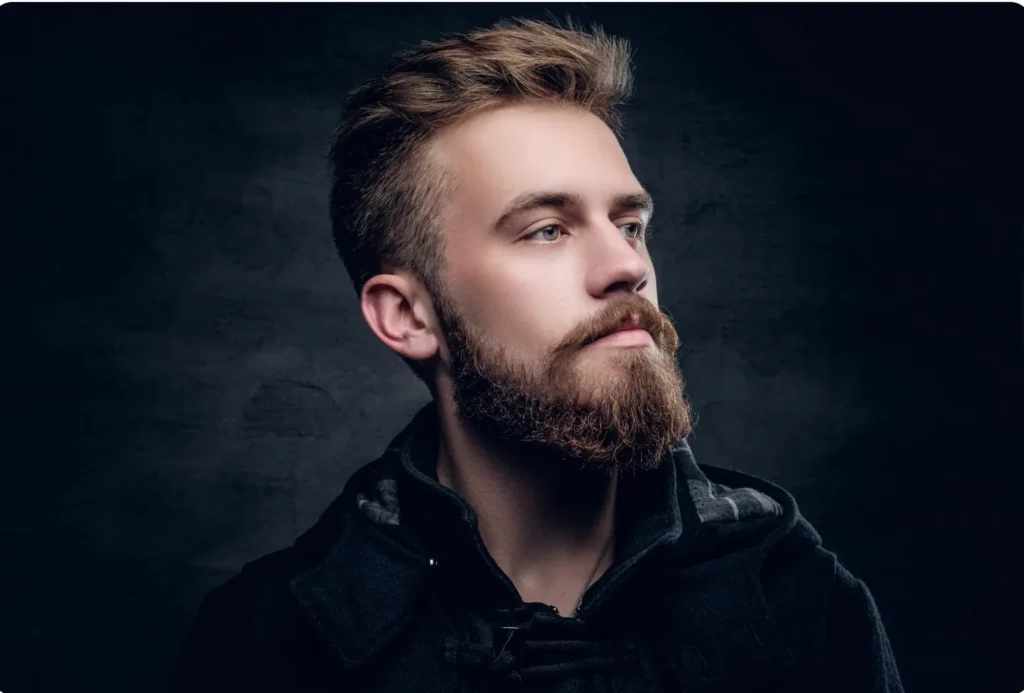
Mutton chops are thick sideburns that extend to the corners of the mouth, leaving the chin clean-shaven. They’re a bold historical style that appears occasionally in fashion-forward grooming circles. Not for everyone — but when done right, they’re undeniably distinctive.
Best for: Square and oval faces
Maintenance level: Medium-high
Styling difficulty: Medium
How to Choose the Right Beard Styles for Your Face Shape
This is the section that most beard guides skip over, but it’s arguably the most important. Your face shape should guide your beard choice more than any trend or celebrity inspiration.
Here’s how to identify your face shape: look straight into a mirror and trace the outline of your face with a washable marker or just observe the proportions of your forehead, cheekbones, jawline, and face length.
Oval Face
Characteristics: Balanced proportions, forehead and jaw roughly equal width, face slightly longer than wide.
The deal: Oval is the lucky face shape — almost any beard styles works. Full beards, goatees, ducktails, stubble — all of them complement an oval face naturally.
Best beard styles: Full beard, heavy stubble, short boxed beard, ducktail, Garibaldi, Van Dyke
Square Face
Characteristics: Strong, angular jawline, forehead and jaw roughly equal in width, face nearly as wide as it is long.
The deal: Square-faced men have strong natural structure. The goal is to add some length and soften hard angles without losing that strong jaw.
Best beard styles: Short rounded beard, circle beard, heavy stubble, Garibaldi (the rounded base adds length), ducktail
Avoid: Chinstrap (emphasizes the square jaw in a heavy way), boxed beards with very sharp corners
Round Face
Characteristics: Face width and length are nearly equal, soft jawline, fuller cheeks.
The deal: The goal is to add length and definition. Styles that add vertical height and taper the sides work best.
Best beard styles: Goatee, extended goatee, Van Dyke, short beard kept tight on the sides with length at the chin, ducktail
Avoid: Full wide beards, mutton chops, anything that adds width without length
Oblong / Rectangle Face
Characteristics: Face is noticeably longer than it is wide, forehead and jaw similar width.
The deal: The goal is to add width and reduce the appearance of length. Rounder, fuller styles work well here.
Best beard styles: Short boxed beard, circle beard, full beard kept wide, mutton chops, short to medium length rounded beard
Avoid: Long pointed beards (goatee, ducktail, Van Dyke) — they exaggerate the length
Triangle Face
Characteristics: Wider jaw than forehead, chin is the widest point.
The deal: The goal is to visually narrow the jaw and broaden the upper face. This is a less common face shape, and the approach is counterintuitive — you want a shorter, less full beard on the jaw area.
Best beard styles: Balbo, Van Dyke, light stubble, anchor beard
Avoid: Full wide beards that add more mass to an already-wide jaw
Diamond Face
Characteristics: Narrow forehead and jaw, wider cheekbones.
The deal: A diamond face has prominent cheekbones as its widest point. You want styles that add width at the chin to balance this.
Best beard styles: Full goatee, Van Dyke, circle beard, anchor beard
Avoid: Styles that emphasize the cheekbones (wide bushy beards at cheek height)
Beard Styles by Hair Type
Your beard hair type matters almost as much as your face shape. Here’s what to know:
Thick, coarse hair: You have the most options. Full beards and long styles hold shape well. Be aware that coarse hair can look unkempt without regular brushing — a boar bristle beard brush is essential.
Thin or fine hair: Shorter styles tend to look better. Stubble and short boxed beards work well; long styles can look wispy. Use a good beard balm to add texture and hold.
Curly beard hair: Curly beards look fuller than they are — a plus for round-faced men. They require more conditioning and detangling. A wide-toothed beard comb and regular moisturizing are non-negotiable.
Patchy growth: This is the most common concern. The key is choosing a style that works with your growth pattern rather than against it. Heavy stubble can mask patches better than a longer beard where gaps are more visible. Goatees and styles focused on the chin and mustache area work well if the cheek growth is sparse.
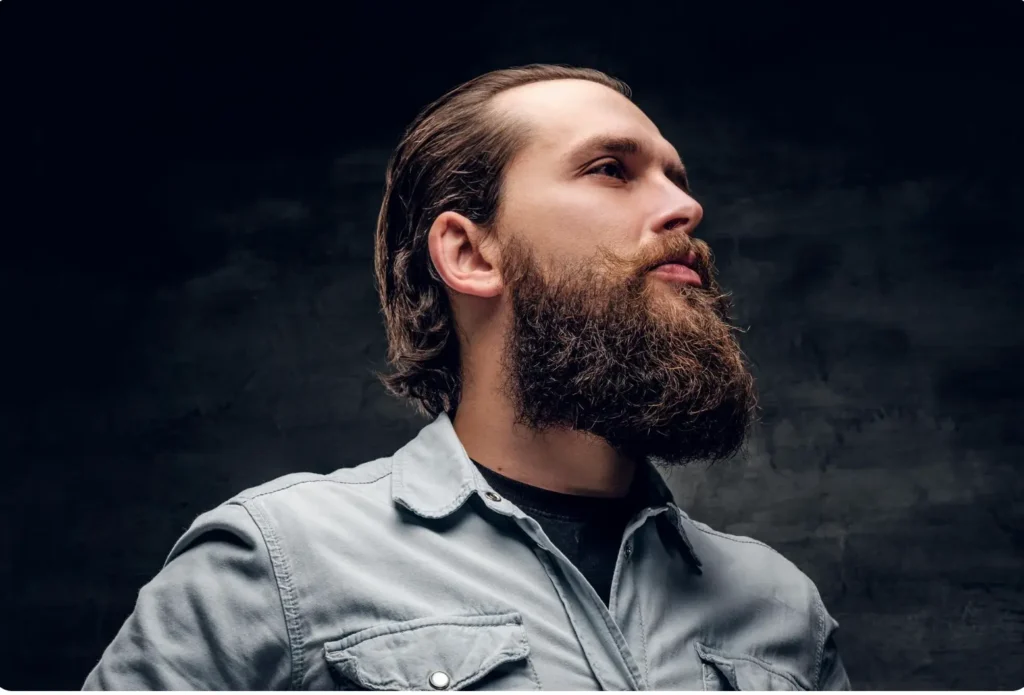
Trending Beard Styles Right Now
Based on what’s showing up in barber shops and on social media in 2025, these are the beard styles with the most momentum:
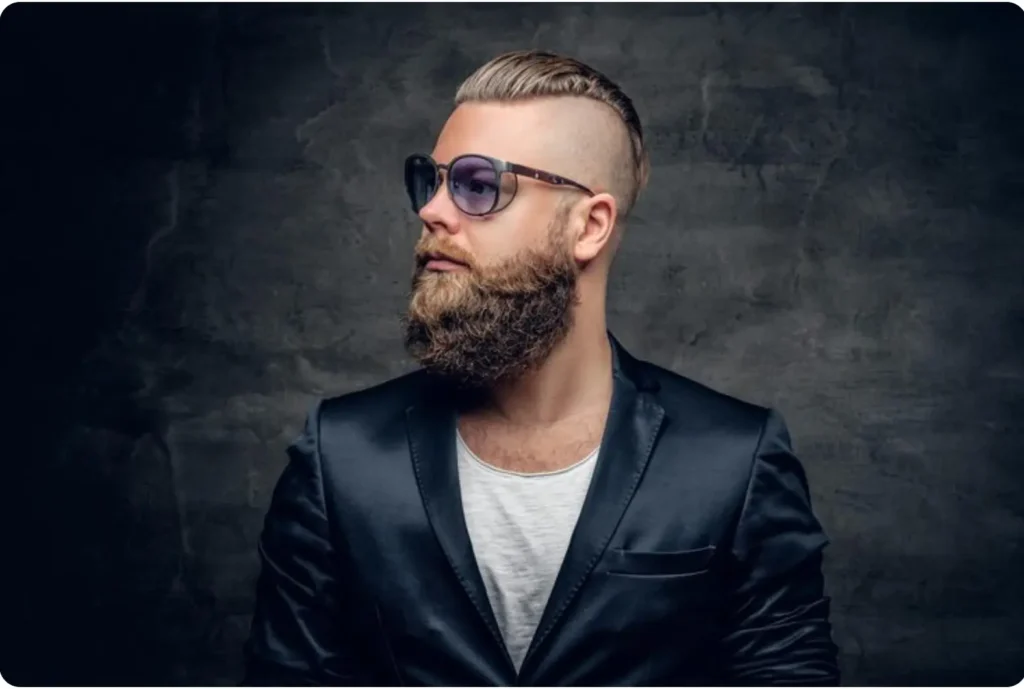
The Corporate Beard (Refined Short Beard): Clean, well-maintained short to medium beard with sharp neckline and cheek lines. This is the professional default right now — seen everywhere from finance to tech.
The Beardstache: A thick, defined mustache over short stubble. Bold but groomed. A strong choice for men who want to stand out without going full beard.
The Soft Natural Full Beard: A reaction against the overly sculpted beards of the mid-2010s. More natural growth patterns, less aggressive shaping — but still maintained with good products and regular trims.
The Tapered Fade Beard: Coordinating your beard with a skin fade haircut where the beard gradually fades into the haircut. Requires a skilled barber but looks seamless when done right.
Textured Stubble: Stubble styled with a light hold product to show texture rather than just lying flat. Low effort, high visual return.
How to Grow and Shape Your Beard
Step 1: The Growth Phase (Weeks 1–4)
This is the hardest part for most men — not because it’s difficult, but because it’s uncomfortable. The early itch phase (usually week 2–3) is the point where most men give up unnecessarily.
What’s happening: the freshly cut ends of shaved hairs are sharp and poke the skin as they grow back. Once they get slightly longer, the itch mostly disappears.
What to do: Keep the skin moisturized. A good beard oil applied daily will reduce itchiness and keep the skin underneath healthy.
What not to do: Trim too early. If you’re going for a full beard, resist the urge to clean it up too aggressively in the first 4–6 weeks.
Step 2: The Shape Phase (Weeks 4–8)
By now, you have enough growth to start seeing the shape of your beard. This is when you establish your neckline and cheek lines.
Neckline: Define it roughly two finger-widths above your Adam’s apple. The line should curve naturally from ear to ear.
Cheek line: Let your natural cheek line grow in first. You may find it’s already clean. If you need to reduce stray hairs, use a trimmer or razor — but be conservative. Taking too much off is an irreversible mistake until it grows back.
Step 3: The Maintenance Phase (Ongoing)
Once your beard is at the length and shape you want, maintenance becomes your routine. See the maintenance schedule section below for specifics.
Essential Beard Grooming Products You Actually Need
Beard Oil: The single most important beard product. Applied daily, beard oil moisturizes both the beard hair and the skin underneath. Look for oils with carrier oils like jojoba, argan, or sweet almond — these closely mimic your skin’s natural sebum. Fragrance is optional; skin benefit is essential.
Beard Balm: Beard balm does what oil does, but also adds a light hold for shaping. It contains beeswax or shea butter as the base. Better for medium and longer beards that need some structure.
Beard Wash: Regular shampoo strips beard hair of its natural oils. A proper beard wash (beard shampoo) cleans without over-drying. Use it 2–3 times per week, not daily.
Beard Conditioner: Used after washing, a beard conditioner (or a leave-in conditioner) restores moisture and makes the beard softer, more manageable, and less prone to tangling.
Beard Comb: A wide-toothed comb for detangling when wet, a finer comb for styling when dry. Kent combs are the industry standard among professional barbers.
Beard Brush: A boar bristle brush distributes natural oils through the beard, trains hairs to grow in the same direction, and adds shine. Use on dry or slightly damp beards.
Quality Trimmer: A reliable trimmer with multiple guards is essential for at-home maintenance. Wahl, Braun, and Panasonic all make professional-grade options at various price points.
Common Beard Mistakes (and How to Avoid Them)
Defining the neckline too high: The most common beard mistake. If your neckline is at or above your jaw, your beard will look like a face-frame rather than a real beard. The neckline belongs on your neck, roughly two fingers above the Adam’s apple.
Letting the cheek line get wild: Stray hairs on the cheeks look ungroomed. You don’t need a perfectly straight cheek line — natural curves look good — but clear stragglers should go.
Skipping the skin underneath: Beard dandruff (beardruff) comes from dry, neglected skin under the beard. Beard oil addresses this directly. Neglecting the skin leads to flaking, itching, and unhealthy hair growth.
Comparing your growth to others at the same time: Beard growth rates and patterns are entirely genetic. Some men have a full beard at 6 weeks; others need 6 months. Your timeline is your own.
Using regular shampoo on your beard: Scalp shampoo is formulated differently from beard wash. It strips the oils that keep beard hair soft and the skin underneath healthy. Use a dedicated beard shampoo.
Over-trimming when growing out: If you’re growing a longer style, every trim sets you back. Schedule trims less frequently during the growth phase and focus on maintaining the neckline only.
Ignoring diet and sleep: Beard growth is driven by testosterone and DHT, both of which are affected by sleep quality, exercise, and nutrition. This isn’t a magic fix, but consistently poor sleep and nutrition do affect hair growth over time.
Beard Maintenance Schedule: What Pros Actually Recommend
| Frequency | Task |
| Daily | Apply beard oil; brush or comb beard; check neckline |
| Every 2–3 days | Trim stubble styles; re-edge neckline if needed |
| 2–3x per week | Wash with beard shampoo; condition |
| Weekly | Trim medium to long beards; apply beard balm for shaping |
| Monthly | See a barber for a professional shape-up (highly recommended) |
The single best thing you can do for your beard’s appearance is visit a professional barber regularly. Even if you do your own maintenance in between, a barber will catch things you miss, fix your lines, and keep your beard looking intentional.
FAQ
Q: What is the most attractive beard styles?
A: Research consistently suggests that heavy stubble (4–6mm) is considered most attractive by the widest audience. However, attractiveness is subjective and depends heavily on your face shape, hair growth, and personal style. A well-maintained beard of any length will almost always look better than an unkempt one.
Q: What beard styles suits a round face?
A: Round faces benefit from styles that add vertical length and reduce width. A goatee, extended goatee, Van Dyke, or a chin-focused beard with tapered sides work well. Avoid full wide beards that add mass to the sides of the face.
Q: How long does it take to grow a beard?
A: On average, beard hair grows about half an inch (1.25cm) per month. A short boxed beard requires 4–8 weeks; a medium beard 2–4 months; a full long beard 6–12 months or more. Growth rates vary significantly between individuals based on genetics, age, and health.
Q: What beard styles is professional and office-appropriate?
A: The short boxed beard, heavy stubble, and circle beard are all considered office-appropriate in most professional environments. Keep lines clean, maintain the neckline, and avoid very long or unkempt styles in conservative workplaces.
Q: Should I use beard oil or beard balm?
A: Use beard oil daily — it’s the base layer for beard skin and hair health. Add beard balm when you need light hold for shaping, especially for medium and longer beards. Many men use both: oil first, then a small amount of balm for control.
Q: What is the difference between a goatee and a Van Dyke?
A: A goatee traditionally refers to hair on the chin only (without a mustache, or with a connected mustache). A Van Dyke specifically features a chin beard and mustache that are kept disconnected — the cheeks are fully clean-shaven, and there’s a clear gap between the mustache and the chin beard.
Q: How do I fix a patchy beard?
A: First, wait — many beards that look patchy at 4 weeks fill in significantly by weeks 8–12. If patches persist, choose a style that works around your growth pattern: heavy stubble masks patches better than longer beards, and goatees work well when cheek growth is sparse. Minoxidil has some evidence for beard growth but should be discussed with a dermatologist first.
Q: How do I trim my beard at home?
A: Wash and dry your beard first, then comb it in the direction of growth. Use a trimmer with the appropriate guard for your desired length. Start longer (higher guard number) and go shorter gradually — you can always take more off, but you can’t put it back. Define your neckline last, then check both sides for symmetry.
Q: What beard styles suits a square jaw?
A: Square-jawed men benefit from styles that add some length at the chin to soften angular features. Rounded beards, the circle beard, heavy stubble, and the Garibaldi work well. Avoid very sharp, angular beard lines that mirror the jaw — they can make the face look overly geometric.
Q: How often should I wash my beard?
A: 2–3 times per week with a dedicated beard wash is the professional standard. Daily washing strips the beard of natural oils and can lead to dryness, itchiness, and beardruff. On non-wash days, rinse with warm water and apply beard oil.
Q: What’s the best beard styles for beginners?
A: Heavy stubble or a short boxed beard. Both are easy to maintain, suit most face shapes, look intentional without requiring advanced shaping skills, and give you room to experiment with length and edges as your confidence grows.
Q: Can I grow a beard if I have patchy growth on my cheeks?
A: Yes. A goatee, extended goatee, Van Dyke, or anchor beard all focus on the chin and mustache area — where most men have their strongest growth — and keep the cheeks clean-shaven. You’re not limited to “full beard or nothing.”
Q: What is beard fade?
A: A beard fade is a technique where the beard gradually transitions from one length to another — often blending from a shorter length at the cheeks into the longer beard below, or connecting the beard seamlessly into a skin fade haircut. It’s done with a trimmer and typically looks best when performed by a skilled barber.
Q: Does shaving make beard hair grow back thicker?
A: No. This is a persistent myth. Shaving cuts the hair shaft at the skin surface, which creates a blunt edge that feels stubbly — but it doesn’t change the hair’s diameter, color, or growth rate. The American Academy of Dermatology has confirmed this.
Q: How do I deal with beard itch?
A: Beard itch is most intense in weeks 2–4 as sharp-cut hair ends grow out. Apply beard oil daily to moisturize the skin underneath. Once hairs are long enough to curve rather than poke, the itch largely disappears. If itching persists beyond the initial growth phase, beardruff (dry skin) may be the cause — use a beard wash and increase your moisturizing routine.
Conclusion
There’s no single “best” beard styles — only the best styles for your face, your growth, and your life. The goal of this guide isn’t to push you toward one look, but to give you the framework to make an informed decision and actually execute it well.
Start with your face shape. Layer in your growth pattern. Be honest about how much time you’ll realistically spend on maintenance. Then pick a style that fits those parameters, commit to it for at least 8–12 weeks, and focus on the fundamentals: clean neckline, daily beard oil, a proper beard wash, and a quality trimmer.
If you’re ever unsure, book a consultation with a skilled barber before committing to a style change. A good barber will assess your face shape, growth pattern, and lifestyle in five minutes and give you advice tailored to you specifically — no algorithm required.
The beard you grow is part of how you present yourself to the world. Take it seriously, take care of it, and it’ll take care of you.
Content on BeardStyles.net is written and reviewed by grooming specialists and professional barbers. For dermatological concerns related to beard growth or skin conditions, consult a licensed dermatologist. The American Academy of Dermatology (aad.org) provides evidence-based guidance on skin and hair health.